
Home > Exhibitions
Tuula Lehtinen’s fairytale-like birthday exhibition Illuminations is in the main building. Jorma Puranen’s The Pond That Remembered All, filmed in Monet’s Giverny, gets its premiere on the gallery floor. Ilkka Virtanen’s Bone Garden astonishes visitors in the Granary. The Pehtoori building is showing Sami van Ingen’s fragmentary melodrama Flame. Tapani Kokko’s Pagan Church thunders in familiar fashion in the park. Laukko Manor’s own collection is on display in the stables restaurant.
Please note that our exhibition premises are not accessible to people with mobility issues.
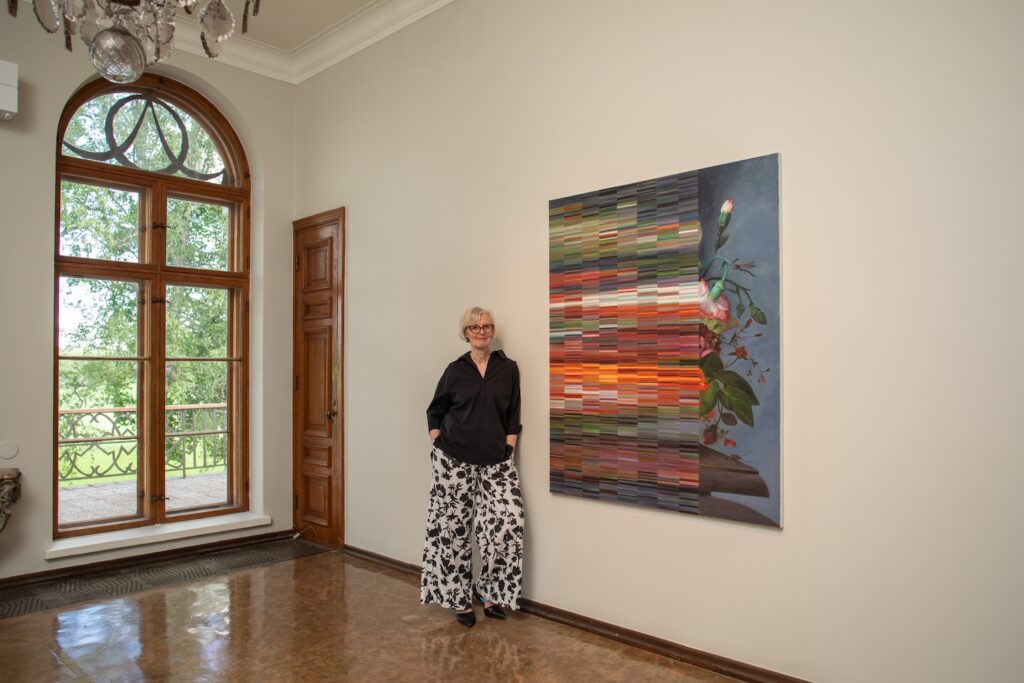
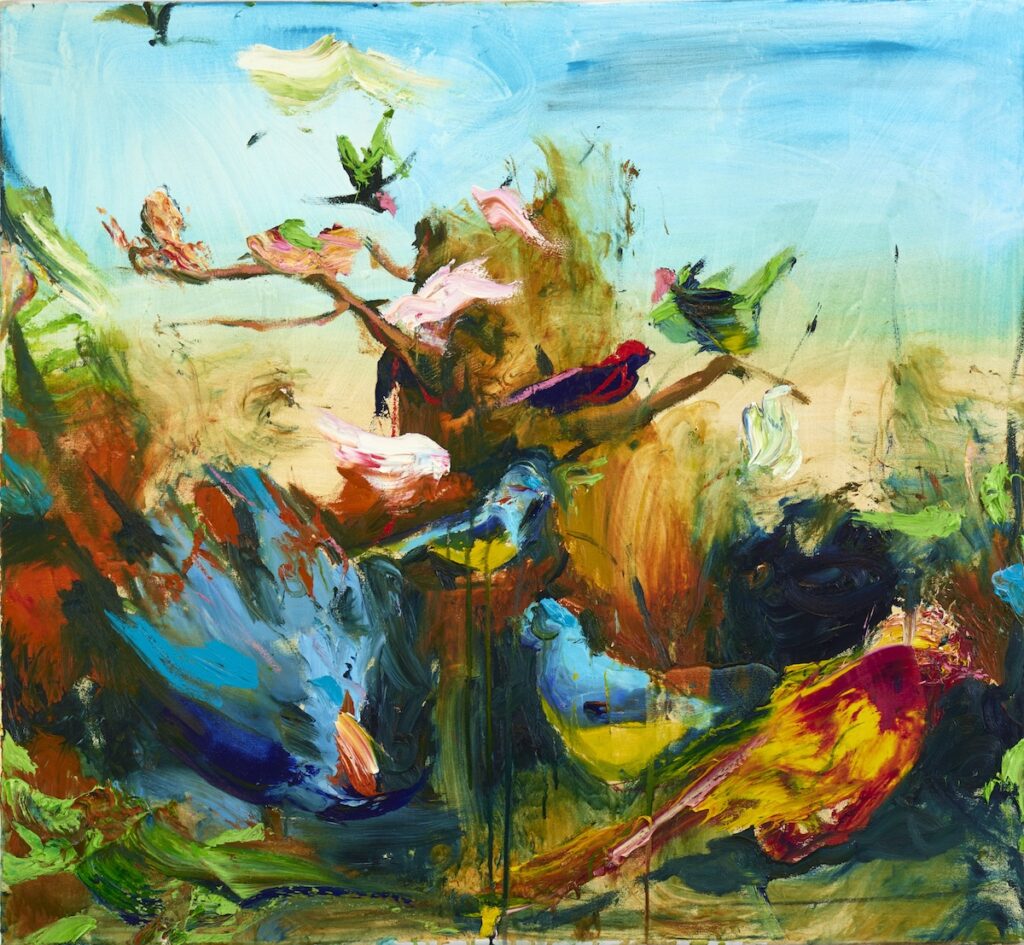
Tuula Lehtinen (b. 1956) is a multi-talent on the Finnish visual-arts scene. In her 70th-birthday exhibition she shows herself to be a contemporary painter who draws on the history of art, and who loves the folds of the Baroque and the lightness of Rococo. Throughout her career, Lehtinen has put the focus on subjects that are devalued as being feminine or decorative. Her paintings of recent years have been inspired by the Flemish masters’ virtuoso floral still lifes and the court painters’ fairy-tale-like portraits.
In the portraits of influential women from a bygone world, Lehtinen is especially fascinated by the beauty of textiles and the art of depicting them. In Laukko’s galleries the fabric folds merely hint at the presence of an enigmatic figure. The curtain-like coloured stripes create a mysterious tension between the visible and the secret. They tempt us to wonder who and what is hiding behind the curtain. At the same time, the intriguing synthesis of figurative and abstract ties these works both to the long tradition of oil painting and to today’s digital reality.
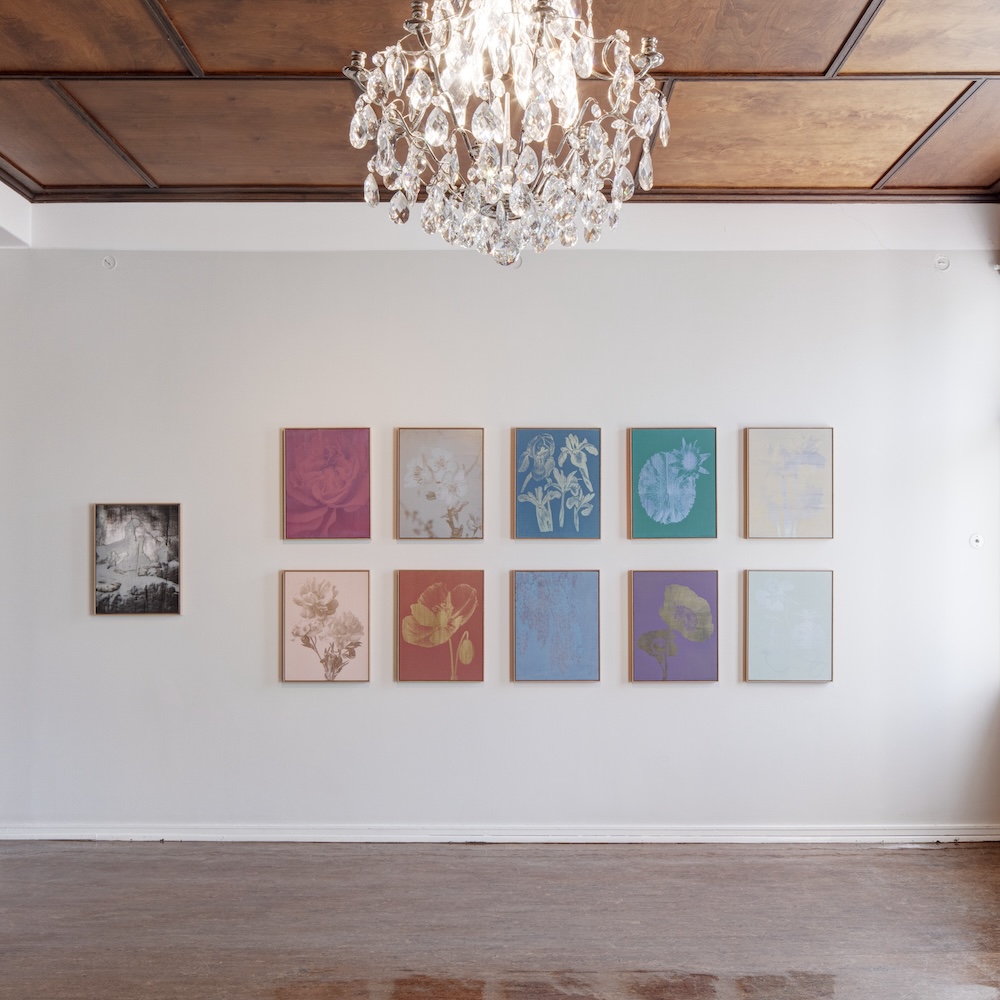
Jorma Puranen has become known for his works that arouse considerations bridging the past with the present. During a residency at the Fondation Claude Monet in Giverny, Jorma Puranen created his series L’étang qui se souvenait de tout. He explored the shifting atmospheres and fleeting light of the garden that inspired Claude Monet’s late works.
Using long exposures and photographing reflections on a lacquered black panel—recalling the 18th-century Claude glass—the images blur the boundary between photography and painting. This series responds to Monet’s pursuit of “the enveloping air,” rendering landscapes not as fixed scenes but as temporal, fluid impressions.
The surfaces ripple with distortions, echoing the Impressionist master’s late struggle with cataracts and compromised vision. The result is a meditative dialogue across time, where the past flickers through reflections and memory becomes its own lens.
The exhibition has been mounted in collaboration with Galerie Anhava.
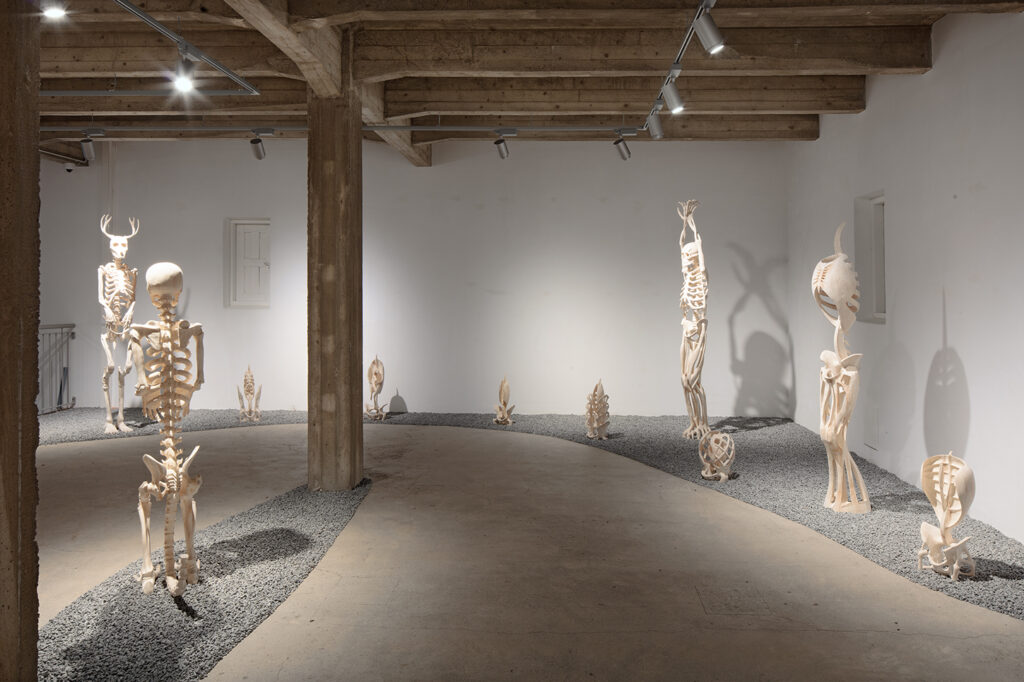
Welcome to Ilkka Virtanen’s (b. 1963) petrified manor garden from an alternative future. In these wooden sculptures that exude classical beauty the anatomical shapes of human beings are intertwined with animals and plants. This startling idea derives from palaeontological discoveries of crosses between animals and plants that lived hundreds of millions of years ago. Inspired by fossils that are thought of as evolutionary sidetracks, Virtanen has spent more than a decade speculating about what future fossils would look like if the evolution of plants and animals had adopted an alternative evolutionary scheme.
In the first phase of his Plan B, Virtanen combined the shapes of people and plants. Then came the trilobites and isopods. In the third phase, the skeletons of humans and animals merged. In Bone Garden, which has been gathered together in the Granary, the hybrids are present in all their diversity. The industrious gardener is a chimpanzee man. Lurking like pests in the shadows of the human trees are a ratman and a moleman. Flower hybrids expertly carved out of aspen grow in the flower beds.
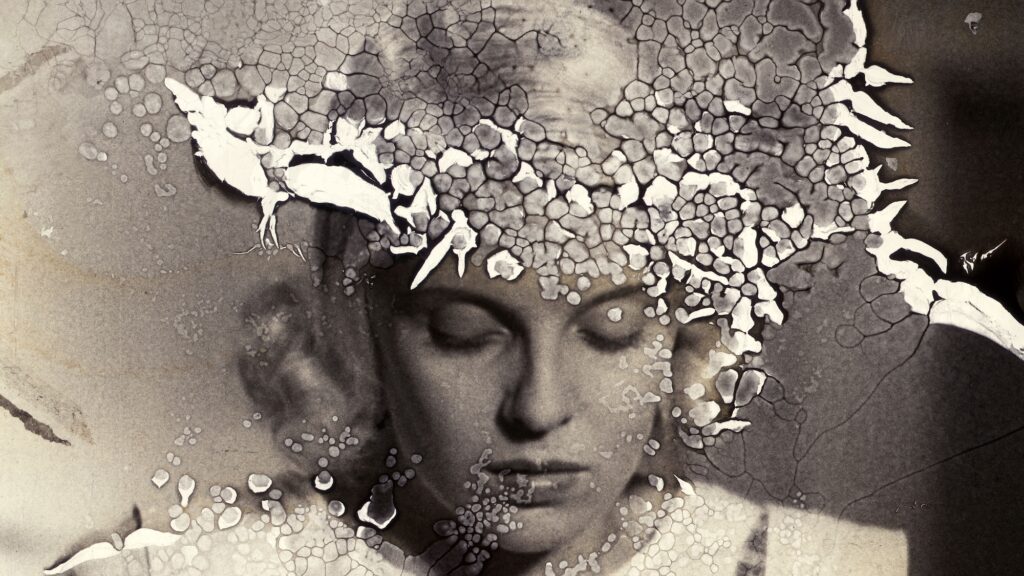
The fragmentary melodrama Flame (2018) is based on the film Nuorena nukkunut (Silja – Fallen Asleep When Young, 1937), directed by Teuvo Tulio and starring Regina Linnanheimo.
Tulio’s early masterpiece was believed to have been destroyed in the Adams-Filmi fire. One of its five reels of film was, however, found in the archives of La Cinémathèque française. Flame is based on the almost-obliterated final section of the remaining nitrate film.
Sami van Ingen has constructed a constantly changing visual symphony out of the rips and distortions in these irreparable images. Like the original work, the common thread running through the dreamlike narrative is the emancipation of the orphan girl Silja caught up in the whirlwind of forbidden love, passion, and patriarchal oppression.
2018 | 15 min | Colour | 1:1.85, age limits: S
D: Sami van Ingen, P: Testifilmi
Tapani Kokko’s (b. 1969) extravagant wooden sculptures have returned to the Pagan Temple. This shrine of art, which appeals to all the senses, was built on the Viking-age cemetery in Laukko Park in 2018.
The carnivalesque wooden sculptures are mementos from Kokko’s three-decade career as an artist. The power of these works to enthral springs from their coarse sculpturality, profound humanity, and astonishing imagination.
Kokko deploys a cornucopia of materials and techniques with a highly personal aesthetic and technical virtuosity. Tapani Kokko’s latest works, inspired by rococo style, will be on display in the collection exhibition in the stable restaurant.
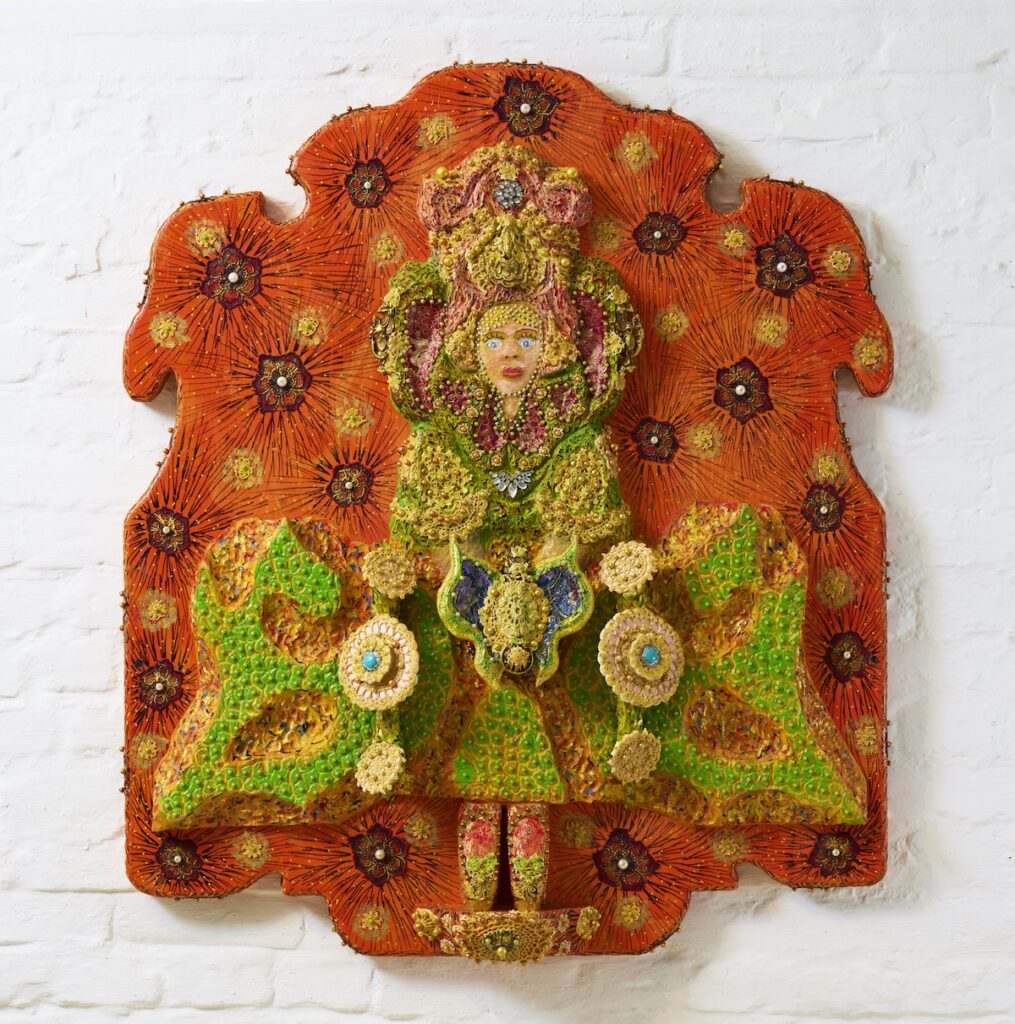
Laukko Manor’s stable restaurant is showing the Manor’s own collection. For the Paradise exhibition new works have been commissioned from Viljami Heinonen, Tapani Kokko and Tamara Piilola. The historic stable building is also showing photographic works by Ola Kolehmainen and Marja Pirilä, as well as paintings by Kati Immonen, Raisa Raekallio and Misha del Val.
Paradise can be seen during the Laukko restaurant’s opening hours. The stable restaurant is in the forecourt at Laukko Manor, outside the museum area, and so does not require an entrance fee.
24 June–16 August (Wed–Sun 12 am–5 pm)
Museum ticket €15,00
Please note that our exhibition premises are not accessible to people with mobility issues.
The restaurant and the park are accessible.
40 km south of Tampere
Less than a two-hour drive from Helsinki, Turku and Pori